
-
213
-
2026-06-23 13:56:41
For B2B procurement managers, fleet operators, and regional warehouse distributors, maintaining high-volume automotive electrical systems is a critical factor in protecting operational margins and reducing vehicle downtime. Among these systems, the starter motor represents a high-current, mechanical-to-electrical nexus that demands systematic, engineering-grade oversight.
This comprehensive guide breaks down the technical architecture, wear indicators, preventative maintenance protocols, and supply chain strategic choices required to maximize the operational lifespan of starter motor components.
Understanding the Role of a Starter Motor
How a Starter Motor Works in Vehicle Ignition
Let’s look at exactly how this component forces a massive engine to fire up. Put simply, the starter motor converts electrical energy from the battery into mechanical energy . The moment you turn the key, the drive pinion snaps forward, and it engages the engine’s flywheel to initiate combustion . As soon as you hear that roar and the engine fires up, the starter has to back off immediately—once the engine starts, the starter motor disengages automatically. If it stays stuck out there, the spinning flywheel will drive the motor backward at high speeds, destroying the internal coils in seconds.
Key Components of a Starter Motor
Whether you are managing massive trucks or passenger fleets, smooth cranking depends entirely on a tight team of internal parts working together:
Armature, solenoid, and commutator are essential for proper function . The solenoid acts as a brutal electromagnetic switch, the armature takes the brunt of the rotational stress, and the commutator manages the direction of the electrical current.
Brushes and bearings ensure smooth rotation and electrical contact . Worn carbon brushes cut off your power supply, and sticky or dried-out bearings jam up the whole rotation.
You can never overlook these smaller sub-components; the rule under the hood is clear: each component must operate efficiently to maintain reliable starting performance. If just one weak link drags, your vehicle is stranded.
Common Signs of Starter Motor Wear and Failure
Early Warning Indicators of Problems
Drivers and workshop mechanics need to keep their ears open. Before a starter completely dies on the road, it will give you clear warning signs:
Grinding noises or clicking sounds during ignition suggest mechanical wear . That rapid, sharp clicking means the solenoid is starving for juice and cannot hold its connection, while a nasty grinding noise means the teeth are physically eating each other alive.
Slow or intermittent engine cranking indicates electrical issues . If the engine sounds tired and struggles through a slow "whir-whir" during startup, you are dealing with a severe electrical bottleneck or massive resistance.
Smoke or burning odors may point to overheating or short circuits . Smelling burnt plastic or seeing smoke means internal components are literally cooking, usually from someone holding down the ignition switch way too long.
Factors That Accelerate Starter Motor Deterioration
Some fleets burn through starters every few months while others last for years. The difference usually comes down to these hidden killers:
Frequent short trips prevent full battery recharge, stressing the starter motor . Driving only a few miles means the alternator never has time to pump power back into the battery, forcing the starter to repeatedly crank on a half-empty charge.
Corrosion on terminals increases resistance and heat buildup . Green crust and oxidation act like a dam on your wiring, choking off the current and turning that electrical energy into destructive heat.
Poor-quality replacement parts reduce operational longevity . Cutting corners on unverified, cheap clones means you are buying fragile materials that will fail early under harsh working conditions.
Essential Maintenance Practices for a Healthy Starter Motor
Regular Inspection and Cleaning Techniques
If you want to keep your inventory moving and avoid towing bills, maintenance cannot be an afterthought. Make sure your mechanics check these three areas during every routine service check:
Check connections for corrosion or loose fittings periodically . Severe road vibrations love to back off terminal nuts, which leads to heavy electrical arcing.
Clean terminals with appropriate electrical contact cleaners . Do not just wipe them with a dirty rag; blast away the oxidation and grime with a dedicated electrical cleaner.
Inspect wiring insulation for cracks or damage that may cause shorts . Trace the thick cables back from the starter motor, looking for any spots where exhaust heat has cooked the insulation or left it brittle.
Lubrication and Component Care Guidelines
Handling massive torque means dealing with serious friction, but keeping things smooth requires a precise touch:
First, always follow the build sheet: apply manufacturer-approved lubricants to moving parts sparingly . A tiny bit of high-grade grease on the splines goes a long way.
Make sure you do not go overboard: avoid over-lubrication, which can attract dust and debris . Too much grease turns into a sticky sludge that traps clutch dust, jamming up the drive gear return.
Give it a manual spin: ensure bearings rotate freely without friction or noise . If you feel any catching or rough spots, pull the unit and swap the bearings out before it takes down the whole shaft.
Electrical System Care to Support Starter Motor Performance
Battery Maintenance and Voltage Checks
The starter motor is wholly dependent on the battery. If your power source is weak, the starter will burn itself up trying to pull current that is not there:
Maintain optimal battery charge levels to prevent strain on the starter motor . A healthy battery keeps voltage high, meaning the starter runs cooler and cranks faster.
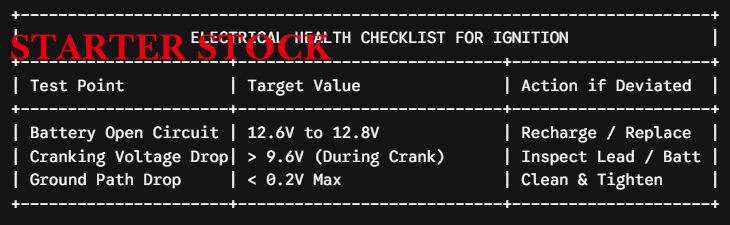
Do not rely on guesswork: test voltage regularly using a multimeter to ensure consistent output . Check both the resting voltage and the voltage drop during a live crank.
Replace aging batteries before they affect starting efficiency . Getting rid of an old, tired battery early is cheap insurance against burning out your starter coils.
Ensuring Proper Grounding and Wiring Integrity
A solid electrical return path is just as vital as the hot wire, yet it is the most overlooked part of the circuit:
Tighten all ground connections to reduce voltage drops . Clear away dirt and rust down to bare metal; even a tiny drop in grounding voltage robs the motor of its torque.
Replace corroded cables promptly to maintain current flow . Green, oxidized wires hide inside clean-looking jackets, quietly starving the system of power.
Use high-quality wiring materials resistant to heat and vibration . Opt for thick-gauge copper leads with heavy-duty insulation built to handle tough fleet environments.
Professional Servicing and Replacement Considerations
When to Seek Expert Assistance
Basic shop visual checks can only go so far. Sometimes you need to hook the vehicle up to advanced diagnostic gear to see what is really happening inside:
Persistent starting issues despite maintenance warrant professional inspection . If you have cleaned everything and the power source is strong, the problem is deep inside the housing.
Technicians can test current draw and diagnose internal faults accurately . Using diagnostic meters tells you instantly if the armature loops are shorted or if the internal poles are dragging.
Timely intervention prevents collateral damage to other electrical components . Catching a shorted starter early protects expensive onboard computers and sensitive ignition switches from getting fried by voltage feedback.
Choosing Reliable Replacement Parts and Services
When a unit finally reaches the end of the line, procurement teams need to put quality metrics ahead of rock-bottom pricing:
Select OEM or high-grade aftermarket starter motors for durability . Look for verified components constructed with pure wire and heavy solid copper contacts that can take thousands of cycles.
Verify compatibility with your vehicle’s make and model before purchase . Double-check the gear tooth count, flange alignment, and wire plug specs to avoid painful shipping delays.
Request warranty coverage for added assurance on replacement work . A solid warranty program is your safety net, ensuring the factory stands firmly behind their engineering.
Long-Term Practices to Extend Starter Motor Lifespan
Driving Habits That Reduce Strain on the System
Teaching machine operators and drivers some basic mechanical empathy pays off big time in reducing parts turnover:
Avoid frequent stop-start driving in heavy traffic when possible . Every extra key turn adds click wear to the contacts and cuts into the lifespan of the brushes.
Allow short rest periods between repeated start attempts in cold weather . If a cold engine does not fire up right away, do not just hold the key down. Give the starter a couple of minutes to cool off so the coils do not bake.
Turn off unnecessary electrical accessories before ignition to reduce load demand . Shut off the heavy heaters, headlights, and radio before cranking so 100% of the battery's juice goes straight to firing the engine.
Scheduled Maintenance Integration into Vehicle Care Routine
Real fleet reliability is not about luck; it is about building disciplined habits into your regular shop routine:
Incorporate starter motor checks into regular service intervals . Make sure the starter connections get eyeballed every single time the vehicle comes in for a standard oil and filter change.