






















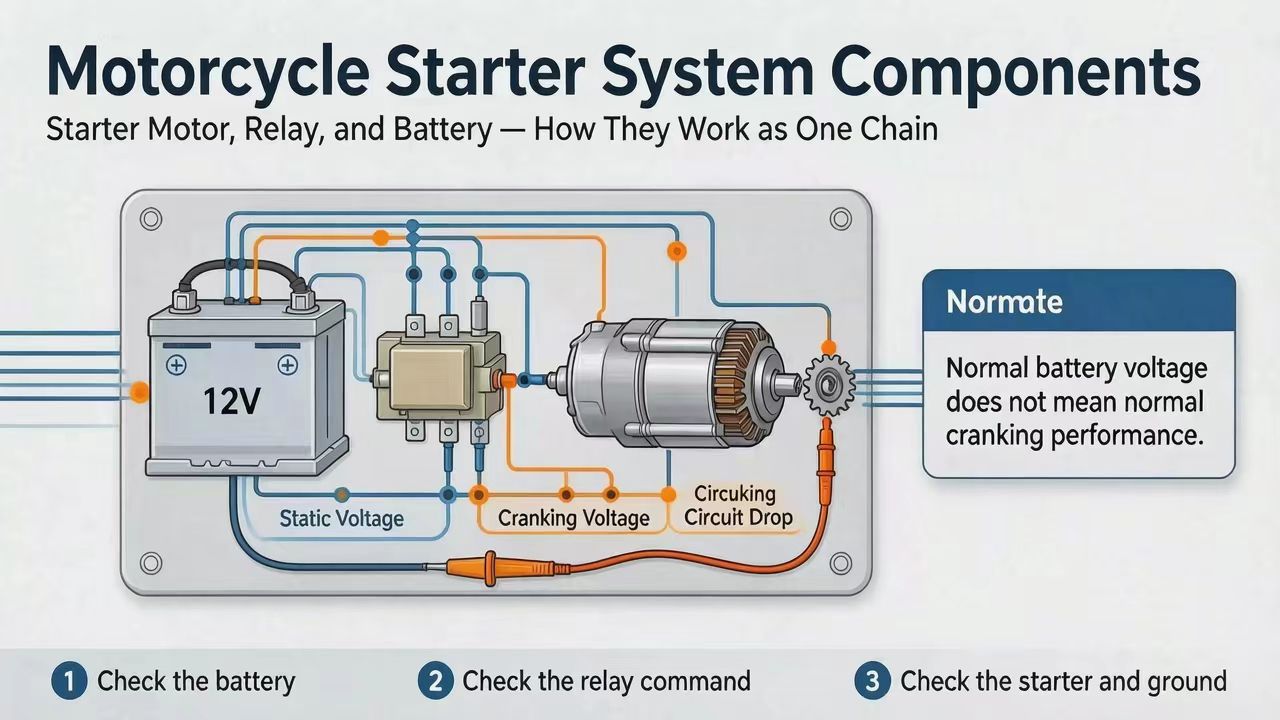
Motorcycle Starter System Components and How They Work Together: Starter Motor, Relay, and Battery
How do the battery, starter relay and starter motor work together to crank a motorcycle engine? A practical guide to each component's job, the three-voltage check that isolates the fault, and when to stop testing and call a technician.
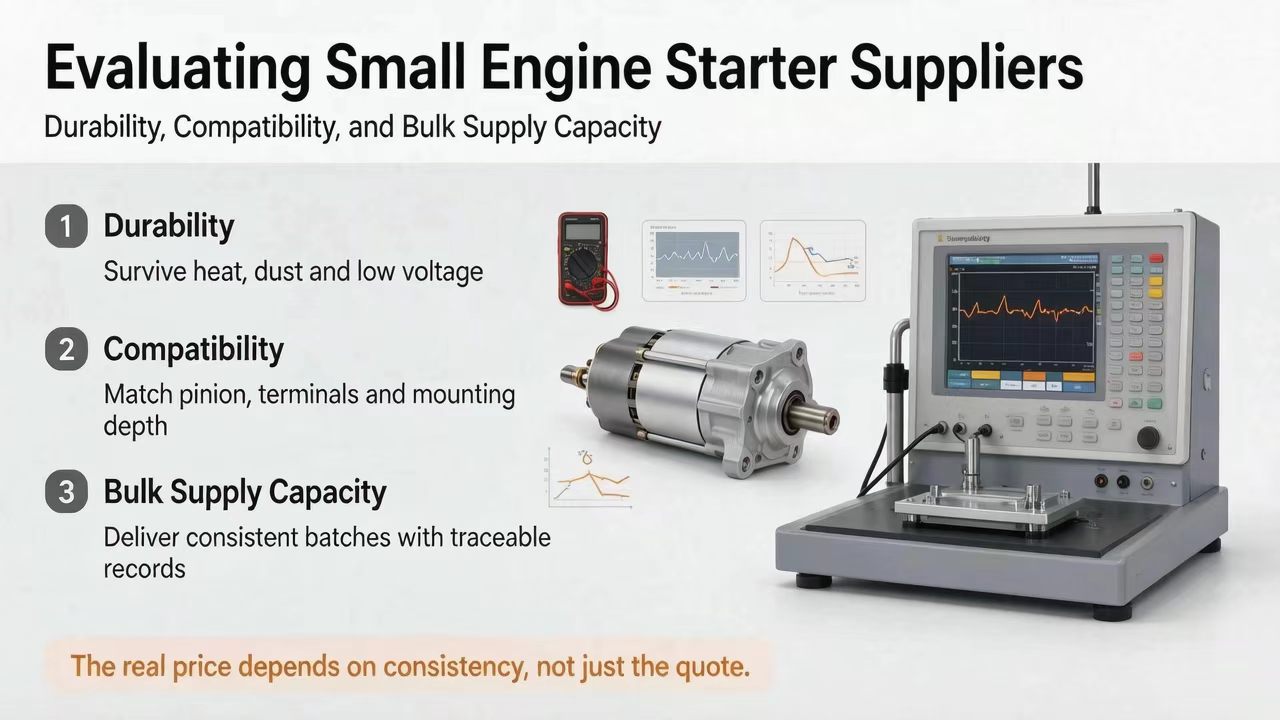
Evaluating Small Engine Starter Suppliers: Durability, Compatibility, and Bulk Supply Capacity
A starter that passes a bench test can still fail in the field. Here is how to judge a small-engine starter supplier on the three things that actually matter — real-world durability, interface compatibility, and whether the production batch matches the approved sample.
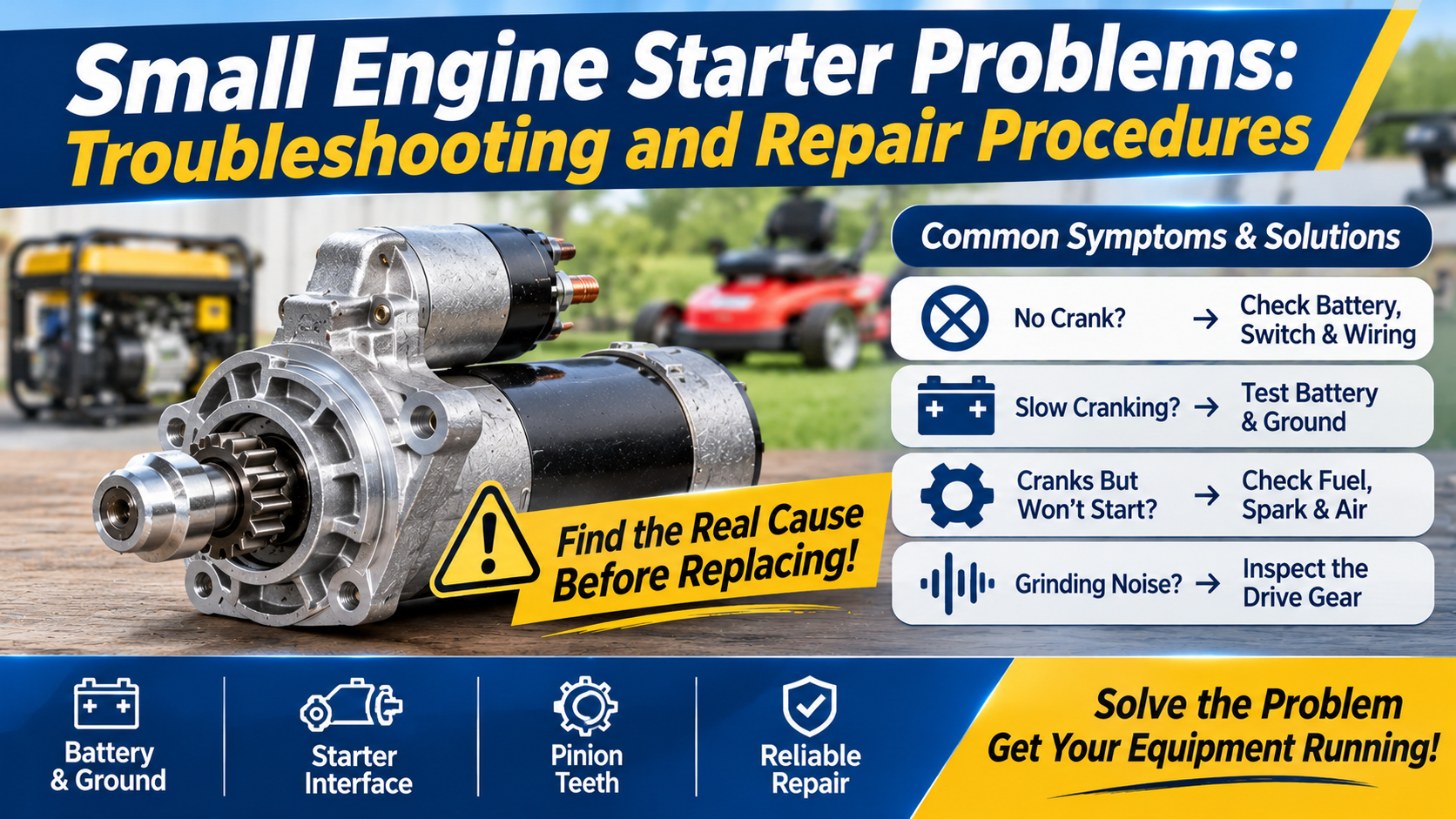
Common Small Engine Starter Problems: Troubleshooting and Repair Procedures
A small engine that won't start is usually blamed on the starter — but most "starter problems" are a weak battery, a bad ground, or a fuel and ignition fault. Here is how to tell which one you have, the checks that separate them, and when to stop and hand it over.
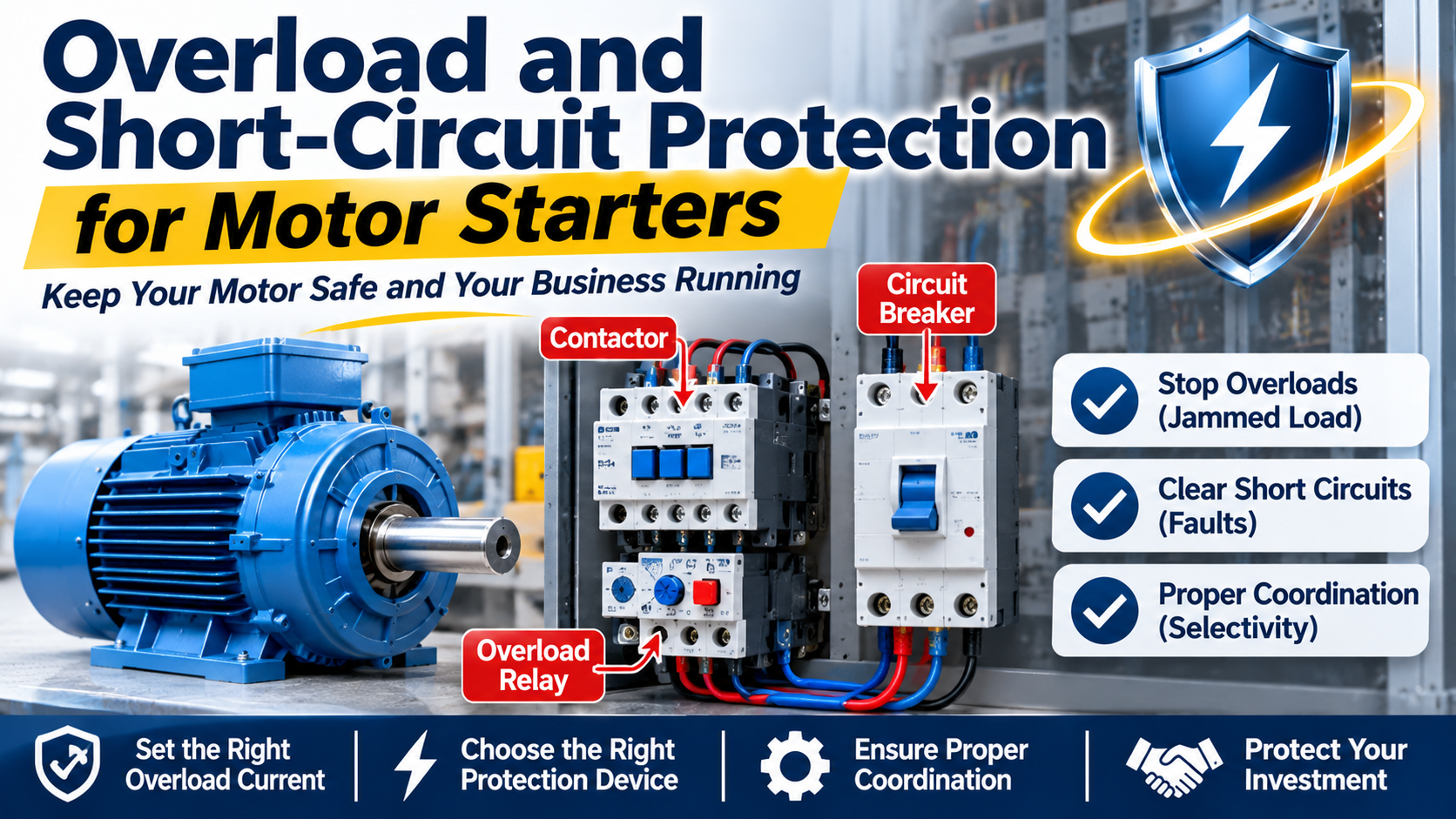
Overload and Short-Circuit Protection for Motor Starters in Industrial Applications
An overload relay and a circuit breaker protect a motor from two different faults. One device cannot do both jobs. Here is what each catches, how to set the overload, and the starting-current trap that burns motors anyway.
Motor Control Wiring Diagrams: Configuring Starters, Contactors, and Overload Protection
How to read and configure a motor control wiring diagram — choosing the starting method, sizing the contactor by utilization category, and setting the overload relay where it actually sees motor current.